Pragdealism
Orientation in an Age of Change.
Check out Pragdealism on Substack

The Irony of Speed
When I joined the audiovisual industry in 1996, projectors could barely display a computer screen. Then came HD. 2K. 4K. 8K. Every jump felt like magic.
One day, the magic was gone. Not because the technology stopped improving, but because we could no longer see the difference.
We didn’t need higher resolution. We needed glasses.
So many possibilities. Such human obstacles.
That’s the irony of speed: technology keeps accelerating. We don’t. And that mismatch may be why so many of us feel exhausted just trying to keep up.
My new essay explores what the technology-biology gap is costing us, and why we still get to set the pace.
Defining What We Are Not
Every election since 2016 has arrived as a wave its supporters were sure would be the last. None was.
The 2026 blue wave is just the latest. The polls missed again, this time in the opposite direction. Within days, both the winners and the losers were struggling to define what’s next.
In my new essay, I argue that we’re living through an Intertidal Moment, and that elections aren’t really about politics. They’re about us, and how we respond to change.
Elections can change who holds power. Our values are the compass.
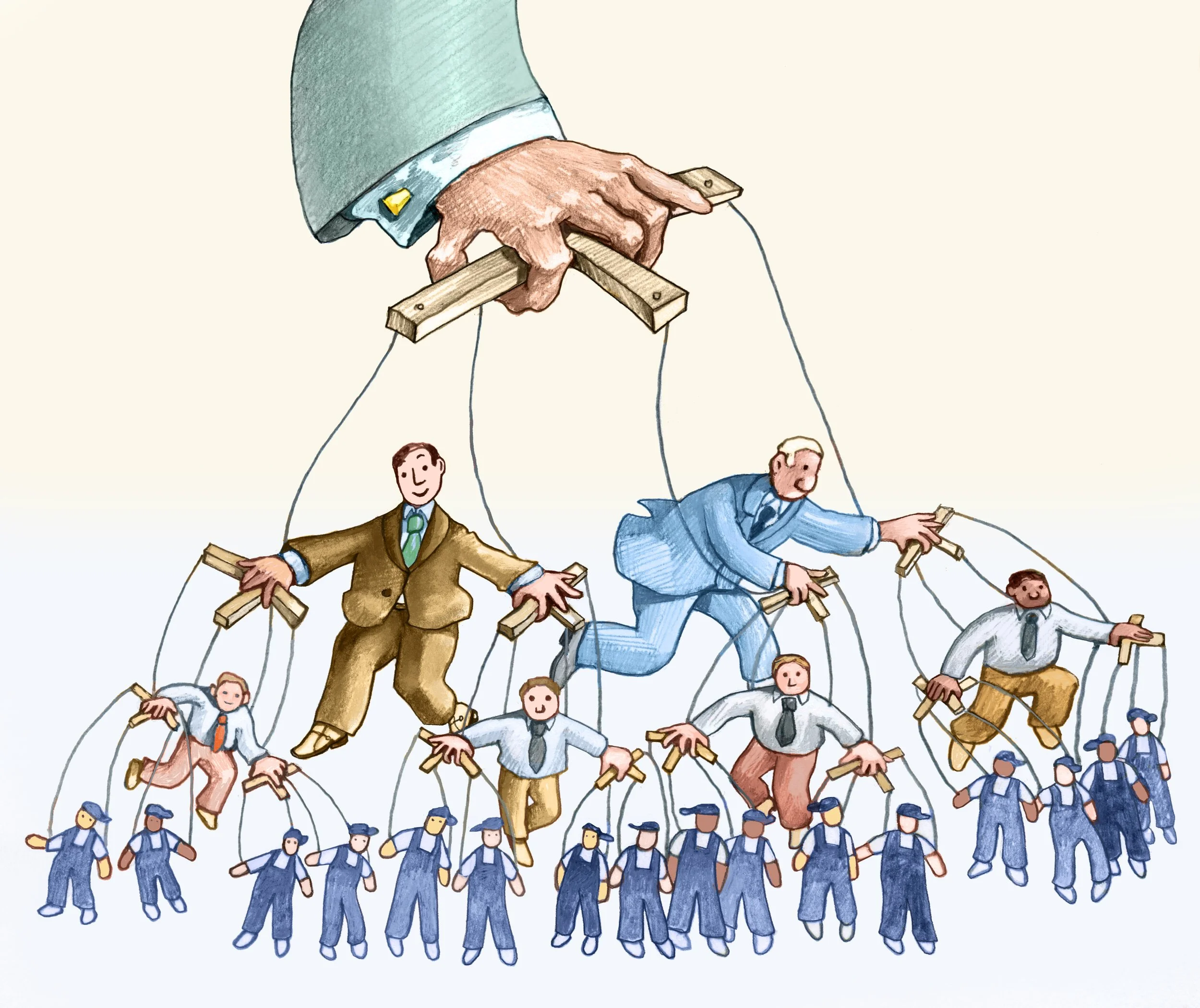
The Rule of Least Concern
The one who cares less holds the power.
I first heard it called the “Rule of Least Concern” in college. I didn’t expect to find it running in my apps.
So, a question: Who cares more about your relationship with your favorite social media platform, you or the company that owns it? Your answer is their business model.
My new essay looks at how the platforms built empires on our need, and how to stay without surrendering.

Feeling Full, Not Nourished
Feeling full isn’t the same as being nourished. Feeling informed isn’t the same as being informed. And attention isn’t the same as awareness.
We no longer have to seek information; it finds us. Algorithms study our every click, and the tools of influence don’t just capture our attention; they shape what we perceive as real. Cultivating awareness puts us back in control.
In my latest essay, I explore the two ends of the mind’s lens and why widening it may be the greatest challenge of this Intertidal Moment, the turbulent space between what was and what is becoming.

Warped Reflections
A mirror feels honest, its image familiar—until change warps our world. Then, what it reflects becomes disorienting and exhausting.
What we are experiencing is not new.
We've been here before.
"Warped Reflections" is about what happens to our sense of self when innovation warps the mirror that reflects our understanding of the world—and why the only question that ultimately matters is what we choose to do next.
Because, as with every generation before us, our thoughts, words, and actions will leave fingerprints on the future.

Seeking Wisdom in an Intertidal Moment
Information is everywhere. Intelligence is everywhere. Wisdom? Not so much.
The challenge of our time isn’t technology, or even its “intelligence.” It’s our mindset.
“Seeking Wisdom in an Intertidal Moment,” explores why, and what it takes to choose a different one.

Published: I Took the Red Pill
Have you ever had an idea, a vision, something you really wanted to do, that turned out to be more work than you ever imagined? You know, the kind of pursuit that makes you say, "If I'd known how much work this was going to be, I never would have started."
It happens to me all the time. And that's by design.
My book Seeker's Mindset is now published. Here's the story behind it.

Even Uncertainty Has Changed
Years ago I bought a small framed print in a shop in Fairbanks. It read: "When nothing is certain, anything is possible." I never forgot those words.
When the future breaks open, revealing the new and unexpected, do you see a peril or a possibility? Your response matters more than you think.
My latest article in the Pragdealist newsletter takes a closer look at the powerful insight the print offered.

What? I Can't Hear You!
“Who's your biggest competitor?” A marketing friend asked me that while we were mapping out the launch for my book. My answer surprised him at first. Then he smiled in recognition. I think you'll do the same.
The latest essay from the Pragdealist: how to respond to a world that won't shut up.

The Worry We Choose
How do we choose what we worry about?
Two challenges. Two things to worry about. Two opposite reactions — and, I think, the same instinct underneath both.
In my latest piece, I dig into why we ignored the danger we were sure of and fear the one we can't predict — and what that says about how we meet change.

The Worst Advice
Have you ever handed off something you enjoyed in the name of efficiency or profit, and regretted it? We're told, more insistently every day, to let the machine do whatever it can do for us. But some of what we're being urged to give up is the very thing that provided the value, that made the work — and the day — worth it.
This essay is about the impact and hidden cost of outsourcing experience.

The Trophy Shop
As a child, I walked into a trophy shop. Little did I know I was catching a glimpse of the future.
The attention economy, to be precise.
I'm not referring to the corporate commodity side that extracts and trades in our algorithmically monitored preferences. I'm speaking of the consequences of living and working within it.
My new piece, The Trophy Shop, is about that difference—and where real validation actually comes from. (Hint: it starts with your why.)

The Fun-to-Misery Ratio
I stopped chasing work-life balance and started using something simpler: the Fun-to-Misery Ratio. The premise—it's only work if you'd rather be doing something else. Take the time to notice.
It's a mindset that shatters the illusion of work-life balance—because it was one life all along, yours.
New post on why balance is the wrong goal, and what to measure instead.

The Cerebral Department of Transportation
Why do some beliefs only deepen, no matter the evidence to the contrary?
The answer lives in how our brains construct and maintain the roads our thoughts travel.
This essay is a guide to the Cerebral Department of Transportation, and learning to direct the road crew so we arrive at the destination of our intent.

Curiosity is a Choice
When was the last time you were truly curious? I'm not referring to a headline that grabbed you.
Not a rabbit hole that confirmed what you already believed. I mean the wide-eyed kind of curiosity you had as a kid. If you can't remember, there's a reason and a cost.

The Definition of Insanity has Changed
We all know the old definition of insanity: doing the same thing over and over and expecting different results.
But in a changing world, is that definition still accurate? I don't think so. Most of us are working from a script we didn't write, with expectations we rarely question. That worked well enough when the currents of change were placid. They're not anymore.
My latest piece is about that gap: why the ground feels like it's shifting under us, and what kind of mindset actually meets the moment.

What Am I to That?
Everything is changing, everywhere, all at once.
We won't find stability by trying to hold on to something in perpetual motion.
When change hits, the instinct is to interrogate it: What is this? We demand the chaos explain itself so we can sort it, rank it, make it hold still. It never does.
So, I recommend asking a different question. Not about the chaos—but about ourselves.
What am I to that?
To that circumstance. That change. That decision. The first question scatters our authority. The second puts us back in command.
It's the question at the heart of my book, Seeker's Mindset. And the key to stability amid constant movement.

Be Someone
Back in the 1990s, a keynote speaker warned a room full of us: "Be someone, not something." I was in my 20s. I understood the words. It took me decades to understand what they cost.
I finally wrote down what I've learned since — about the quiet difference between the two, and the work of choosing one.

The End-User Awards the Prize
Thirty years implementing new technologies taught me one lesson the current AI discourse keeps missing:
Innovation, implementation, and user adoption are three entirely different things.
I've watched interactive whiteboards get rejected in favor of dry-erase markers. I've watched sophisticated audioconferencing systems get bypassed for a Polycom in the middle of the table. I've watched oilfield workers cover the camera with a baseball cap—the "hat-cam"—to guard against prying eyes.
Forecasts about AI's impact are measuring from the wrong end of the supply chain.
If we choose carefully, we become the authors of the story—not a character within it.
My latest essay: The End-User Awards the Prize — What the Hat-Cam Taught Me

No Coincidence
A month after I told my wife — and no one else — that I wanted to write a book, I sat down next to a stranger on a flight to Anchorage. What she said when I asked about her work changed everything.